Bright Lights, Loose Change: What Blackpool Arcades Teach Us About Online Casino Design
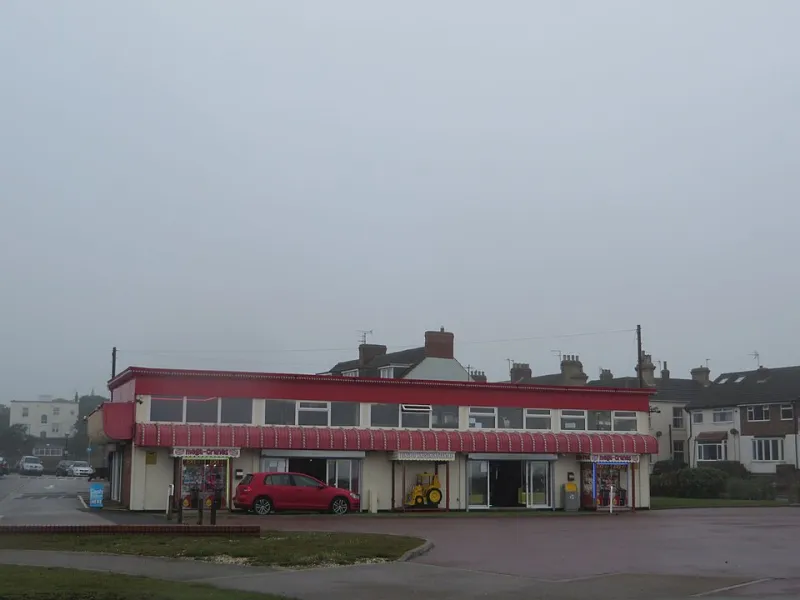
Photo: Graham Robson , CC BY-SA 2.0, via Wikimedia Commons
There's a particular sound on a British pier in August: copper coins cascading into a metal tray, a grabber machine whirring hopelessly, a fruit machine playing a jingle at a volume that suggests it's been personally slighted. Step into an online casino and the sounds are different, but the design language is oddly familiar. Both are in the business of keeping you there a bit longer than you planned.
That's not automatically sinister — an arcade is a piece of entertainment, and so is a slot. But the seaside has one big advantage over your phone. Let's dig into what each does well, and where the pixels start to play dirtier than the pier.
The pier playbook, translated
Walk along the Golden Mile in Blackpool or through the amusements at Brighton Palace Pier and you'll notice the same handful of cues repeated over and over:
- Sound as a spotlight. Every cabinet has its own audio signature. A cascade of coins, a rising arpeggio, a cheeky cartoon voice. It's there to tell you something happened — even when nothing much did.
- Light as a beacon. Warm bulbs, spinning toppers, screens that flare when a machine two rows over pays out. Your eye is being pulled in a direction by design.
- Big numbers, small stakes. The prize is written enormous; the cost of a go is 50p and printed in a font you'd need to squint at.
- The near-miss as entertainment. The push of a 2p coin that almost topples a pile. The grabber that lifts a teddy, wobbles, and drops it. Both are theatre, and both are calibrated to make you try again.
Now map that onto a modern online slot. The near-miss is a reels-based tease. The coin cascade is a win animation, sometimes played for a return smaller than your stake. The flashing cabinet next door is a live feed of somebody else's big win scrolling down the side of your screen. The 50p stake is now a default spin cost, sitting quietly under a headline jackpot figure.
Nostalgia isn't a neutral force
Part of the appeal of the arcade is that it feels quaint — a bit tatty, a bit harmless, a bit British holiday. That framing does a lot of work. It lets designers borrow the seaside's charm and apply it to products that run at 24/7 speeds the pier could never manage.
Be honest about the nostalgia: the machine that ate your holiday spending money when you were eleven wasn't being generous. It was just charming while it wasn't. Charm is a legitimate design choice, but it's worth naming it as one.
Where the arcade is actually more honest
The traditional seaside arcade has some built-in friction that online play has stripped away, and it's worth acknowledging:
- Cash runs out visibly. You can feel a tenner leave your pocket. A digital balance barely registers as money at all.
- The venue closes. Arcades shut, and the walk back along the promenade is a natural full stop.
- You look a bit daft hammering a pusher for an hour. Social self-consciousness is a genuinely effective brake.
- It's clunky to escalate. Getting more change means finding a cash machine, queueing, paying a fee. Online, a card is already saved.
None of that makes an arcade a safe place, and plenty of people have spent more than they meant to chasing a stuffed Minion. But the seams show. The mechanics are visible. And visible mechanics are easier to resist.
The tricks worth naming
Here's a rough split between design that entertains and design that pushes:
Mostly entertainment: theme and artwork, a satisfying win animation, the atmosphere of a shared space, a bonus round that feels like a mini-game. These add flavour without pretending a losing spin was anything other than a losing spin.
Mostly pressure: near-miss framing that dresses a miss as almost-a-win; 'win' celebrations that trigger below your stake; loss disguised as gain, where the game congratulates you on 'winning' £1.20 back from a £2 spin; escalating speed options and autoplay; countdown timers on offers; VIP tiers that dangle status in exchange for volume.
The line between the two isn't always clean, and different players will draw it in different places. But if a design choice only works when you're not thinking about it clearly, that tells you something.
Borrowing the seaside mindset
There's a reason the arcade trip works as a memory: it was a bounded, cash-based, socially-shared bit of fun. You can rebuild those guardrails online more easily than you'd think.
- Treat your budget like a change pot. Decide the amount before you open the site, and when it's gone, the visit is over — same as the pier.
- Keep the closing time. Set a session limit or a reality check so the evening ends on purpose rather than by accident.
- Play with a mate, or at least talk about it. The social brake is real, even when it's over a group chat.
- Turn the volume down. Mute the game if the jingles are doing more steering than you'd like. It sounds daft; it works.
The last lap
Seaside amusements and online casinos are both in the business of engineering delight, and there's nothing wrong with enjoying the engineering. The trick is to see the machine as a machine. Enjoy the lights, notice the near-miss sound for what it is, and keep the fun bounded — a tenner in the change pot, an hour on the pier, then a walk and an ice cream.
If it stops feeling like a day out and starts feeling like something you need, GamCare is on 0808 8020 133, and GamStop offers a free tool to block UK-licensed gambling sites. 18+ only.