Confetti With a Spend Cap: The Quiet Maths of UK Casino Prize Draws
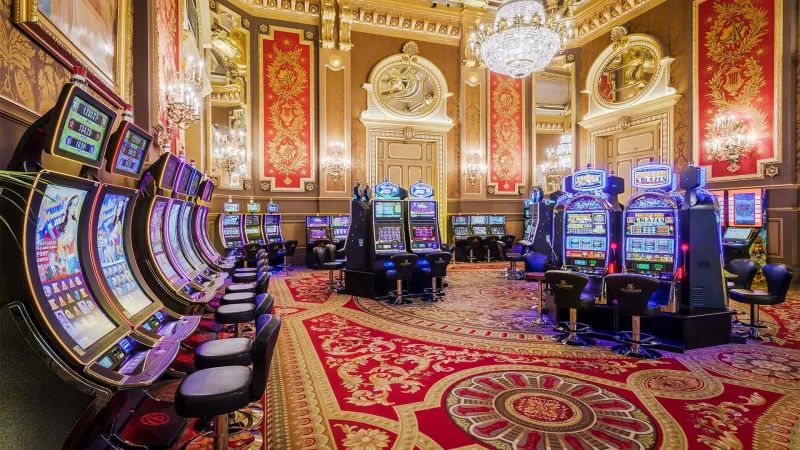
Photo: casino prize draw promotion confetti email UK, via cdn.squaremile.com
There is a certain kind of casino email that arrives looking less like a promotion and more like a birthday card. Confetti. A countdown. A headline prize that could be a car, a holiday, or a lump sum with a very round number attached. Somewhere near the bottom, in the sort of typeface that suggests the legal team won an argument, sits the entry mechanic. In 2026, these prize draws, leaderboards and 'free entry' competitions are everywhere in the UK casino inbox. They can be good fun. They can also be a quiet way of turning a raffle ticket into a spending prompt.
The trick is not to be cynical about every draw. It is to be clear about what the ticket actually is. A prize draw is not automatically a gamble. But a prize draw where the ticket is earned by depositing, wagering or climbing a turnover table is not just a draw with nice wallpaper. The spend is the point. The confetti is the covering.
First, What Is Actually Being Drawn?
Casino promotions often use the same vocabulary for quite different mechanics. A random prize draw is one thing. A leaderboard is another. A 'prize wheel' or 'mystery drop' can be another again. The question to ask is simple: what action creates an entry?
If the answer is 'fill in a form', you are looking at a conventional promotion. If the answer is 'deposit £20 and play selected slots', you are looking at a spending mechanic with a prize attached. If the answer is 'earn one ticket for every £10 wagered', you are looking at a ladder. The draw may still be random, but the entry is not free in any practical sense.
That distinction matters because casino language loves to blur it. A banner might say 'free prize draw' while the terms explain that entries are earned through qualifying play. Another might say 'no purchase necessary' and then bury the free route several clicks deep in a PDF. Neither of those things is necessarily against the rules. But both are reasons to slow down and read the ticket before you start spinning.
The Magic Words, and Their Fine Print
'No purchase necessary' is one of those phrases that sounds like a gift and behaves like a test. In UK promotions, it generally signals that there is meant to be a route into the draw that does not require paying. The practical version might be a postal entry, an online form, an email, or a link inside the terms. The important questions are where that route lives, what it asks of you, and whether it gives you the same chance as a paying entry.
A free route that is hidden behind three menus is not illegal, but it is telling you something about the promotion's centre of gravity. So is a free route that requires an account, a full ID check and a marketing opt-in before it will accept your entry. None of that makes the draw a con. It does mean the word 'free' is doing a lot of unpaid labour.
Look for the boring details: the closing date, the prize description, the number of winners, the odds if they are published, and whether the prize is cash or bonus credit with wagering attached. A £500 prize that arrives as bonus funds with a 40x playthrough is not the same as £500 cash. The confetti does not usually mention that.
When a Spend Threshold Changes the Weather
Here is the classic shape of a quiet gambling nudge. A casino offers a prize draw with a headline prize and a simple-sounding condition: spend £20 on selected games to earn a ticket. On its own, that is not outrageous. Loyalty promotions exist, and plenty of people can spend £20 on entertainment without it becoming a problem.
But look at the structure. The prize is the hook. The spend is the qualifier. The draw is the reward for playing. If you were not planning to play, the promotion has just given you a reason to start. If you were planning to play £10, it has given you a reason to play £20. If multiple tickets are available for bigger spends, it has given you a reason to keep going. That is not a raffle in any ordinary sense. It is a spending ladder with a prize at the top.
Leaderboards can be even more direct. A table that ranks players by turnover is not measuring skill, luck or loyalty in any warm sense. It is measuring spend. The top prize may go to the person who has cycled the most money through the games. That can be a perfectly transparent competition, but it is not a free draw, and it should not be marketed as one.
A Five-Minute Check Before You Enter
Before you click 'enter' or opt in, run a quick audit. What action actually creates the entry? Is there a free route, and can you find it without a treasure map? Does the free route offer the same chance as a spending entry? What counts as spend: deposits, wagers, cash, bonus funds, or something else? What is the prize, and what conditions come with it? Are there multiple entries, and if so, what do they encourage? Is the promotion a random draw, a leaderboard, or a skill-based competition dressed in draw clothing?
One more question is worth asking: would you be doing this anyway? If the answer is yes, the draw is a bit of extra decoration. If the answer is no, the draw is doing the persuading. That does not make it evil. It does make it a marketing tool, and you are allowed to treat it like one.
The Responsible-Play Angle
Prize draws are not the biggest risk in the UK casino market, and it would be overkill to treat every advent calendar and leaderboard as a hazard. But the quiet ones deserve attention because they make spending feel like participation. A ticket feels like a small thing. A deposit feels like a small thing. A session feels like a small thing. Put enough small things together and the draw has become the reason for the session.
If you use deposit limits, time-outs or self-exclusion tools, check whether a promotion nudges you toward changing them. If a draw only works when you spend more than usual, that is useful information. If the free entry route is too much hassle, you are allowed to skip the draw entirely. The prize is not compulsory, and neither is the spend.
The Bottom Line
A prize draw in casino clothing is not automatically a bad offer. Some are clear, capped and genuinely entertaining. But the ticket is the thing to read, not the confetti. If the ticket costs a spin, treat the promotion as a wager with a party hat on. If the free route is real, visible and equal, enjoy the draw for what it is. And if the maths only works when you spend more than you planned, leave the party to someone else. The lights will still be on tomorrow.