A No From the Card Machine: Turning a Blocked Casino Deposit Into a Lasting Pause
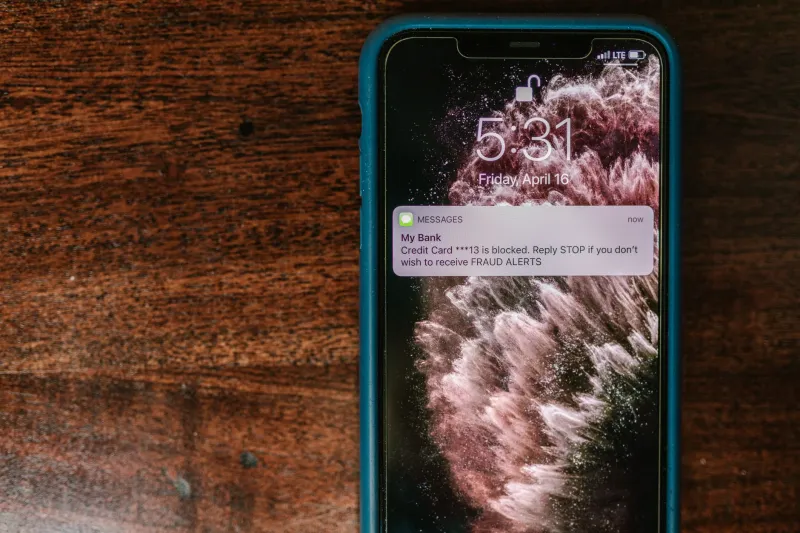
You tap deposit, the app spins, and the card is refused. No dramatic alarm, no lecture — just a small red line and a slightly embarrassed silence. In the moment, it is tempting to file it under “tech nonsense” and reach for another payment method. But in the UK in 2026, a refused casino deposit is often not a glitch at all. It may be your bank’s gambling block doing its job.
At Azzigambling we spend plenty of time on casino culture and offers, but this is the safer-play side of the same conversation. A blocked payment is not a moral verdict on you, and it is not a guarantee of anything. It is, however, a useful piece of information — and sometimes a free pause that arrives before you have to find one yourself.
Why the bank might be the one saying no
Most major UK banking apps now offer some form of gambling control. Monzo, Starling, Lloyds, Barclays, NatWest, Santander, Nationwide and others have rolled out card-level blocks, in-app switches, cooling-off periods or spending controls in recent years. The details vary, and they can change, but the principle is simple: the bank can refuse a payment to a gambling merchant before the money ever reaches the casino.
That refusal might be based on the merchant category code used by the casino’s payment processor. It might be a block you switched on months ago and forgot about. It might be a cooling-off period you requested and then mentally filed away. Some banks let you block all gambling transactions; others offer limits or time-based controls. Some make removing the block deliberately slow.
There are other reasons a deposit can fail, too. The casino’s own payment processor might decline the card, the card might be frozen, the 3-D Secure check might time out, or your available balance might simply not cover it. So the first step is not to assume. Check your banking app notification, read the decline message properly, and if it is unclear, ask the bank. “Why was this payment refused?” is a perfectly reasonable question.
A decline is data, not just a delay
A refused deposit tells you something. It might tell you that a control you set is working. It might tell you that your bank has a default block you did not know about. It might tell you that your card is closer to its limit than you thought.
The useful move is to treat the refusal as a short review, not an obstacle to route around. Ask yourself a few plain questions. Was this deposit planned, or was it a reaction to a quiet evening and a bright button? Had I already set a limit for today? Am I trying to get back to a number I liked better? If the answer to any of those is “not really”, the blocked payment has already done you a favour.
This is not about shame. Plenty of people deposit into casino accounts for entertainment and stay comfortably within their means. But the speed of app-based gambling means the gap between “I fancy a spin” and “I have deposited” can be about four seconds. A bank block widens that gap. A wider gap is usually a good thing.
The workaround trap
When one payment method fails, the casino will often offer another. That is not villainy; it is how payment systems work. But if your bank has blocked gambling transactions deliberately, hunting for an e-wallet, a bank transfer or a different card is a way of undoing your own friction.
It is worth knowing that bank controls are not uniform. A card block may not cover every funding route, and some payment methods sit outside the card rails entirely. That is one reason no single control should be treated as a complete safety net. If you set a block because you wanted a brake, respect the brake. If someone else set it — a partner, a parent, or a previous version of you — find out why before you start looking for a bypass.
Building friction that outlasts one transaction
A bank block is most useful when it is part of a wider setup rather than a one-off surprise. The aim is not to make your account impossible to use. It is to make the impulsive route slightly less frictionless than the considered one.
Practical steps UK players can take include switching on the gambling block in the banking app and leaving the cooling-off period intact. Remove saved cards from casino accounts and turn off one-click deposits where the option exists. Keep a separate account for bills and everyday spending, so gambling money is not sitting in the same pot as rent. Use the bank’s spending controls if it offers them, and check whether the block applies to the card you actually use.
Then pair those outside controls with the tools inside the casino account. Deposit limits, loss limits, session reminders, reality checks and time-outs are all there for a reason. Lowering a deposit limit is usually more useful before a session than in the middle of one, and some casinos apply changes only after a short delay — check the terms rather than assuming. If you want a longer break, a time-out or self-exclusion is stronger than willpower. GamStop remains the broad UK self-exclusion scheme for licensed sites, though it does not cover every operator or every route, which is why bank-level controls still matter.
Neither tool is a silver bullet
A bank block stops money leaving your account by certain routes. A casino deposit limit stops you putting more into that account. Neither one manages how you feel when a session is going badly, and neither one can make a decision for you. Used together, they create layers. Used alone, they can leave gaps.
That is the honest position. Bank controls are useful, casino tools are useful, and neither should be sold as a complete answer to problem gambling. If gambling is causing stress, debt or secrecy, the right move is to talk to someone qualified — GamCare, for example — rather than to rely on an app switch.
The bottom line
A refused deposit is annoying for about ten seconds. After that, it is information. It might be your bank asking a question on your behalf. It might be a control you forgot you wanted. It might simply be a pause that arrived before you had to create one.
So before you reach for another card, read the message. Check the app. Ask the bank if you need to. Then decide whether the “no” is worth keeping. In a gambling culture built on smooth taps and instant access, a little friction is not a malfunction. Sometimes it is the most useful feature in the whole app.